
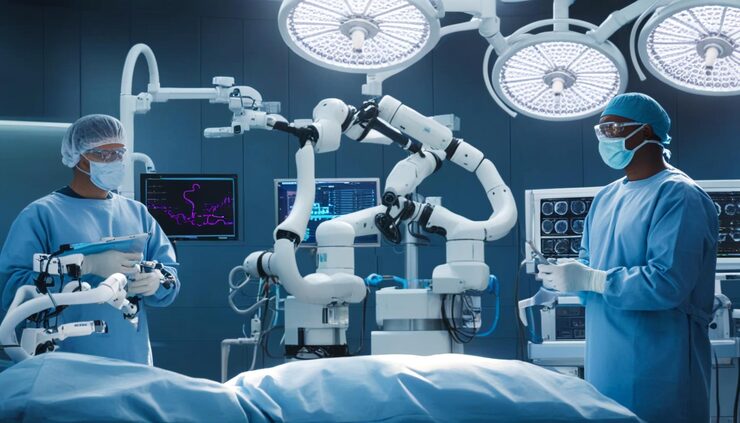
Robotic Uro Surgery in JP Nagar and BTM Layout, Bangalore
Robotic uro surgery uses advanced minimally invasive technology to perform selected urological and reconstructive procedures with enhanced precision, improved visualisation and smaller incisions. Dr. Srikanth provides detailed evaluation and personalised surgical planning to determine whether robotic surgery is suitable for each patient’s condition.
The clinic is located at Dr. Srikanth – Urocare Urology Superspeciality Clinic, 476, 6th Main, 8th Cross Road, Mico Layout, BTM Layout 2nd Stage, Bengaluru, Karnataka 560076, conveniently accessible from JP Nagar and nearby areas.
Robotic uro surgery uses advanced minimally invasive technology for selected urological procedures. It supports precision dissection, better visualization, and smaller incisions in complex surgery.
Dr. Srikanth offers focused evaluation and treatment across this service area with an emphasis on accurate diagnosis, minimally invasive care when suitable, and long-term follow-up where needed.
What This Service Covers
- Patients are usually referred for robotic surgery when their diagnosis, anatomy, or cancer treatment plan benefits from a minimally invasive operative approach.
- Robotic surgery is considered when precision and minimally invasive access offer a meaningful clinical advantage.
- Not every patient needs robotic surgery, so suitability is assessed carefully before recommending it.
- Planning includes cancer control, anatomical details, and expected functional recovery.
- The aim is safe surgery with reduced blood loss, smaller incisions, and smoother recovery when appropriate.
Treatment planning is guided by symptoms, examination findings, medical history, age, associated conditions, and the need to preserve long-term urinary and overall health.
Evaluation and Treatment in Robotic Uro Surgery
- The decision is based on consultation, imaging, biopsy or pathology reports, anesthesia fitness, and a review of whether robotic surgery is the safest and most effective option.
- Robotic surgery may be advised for selected cancer and reconstructive procedures to improve access, reduce blood loss, and support smoother recovery.
- Operative planning is based on diagnosis, imaging, pathology, and anesthetic fitness.
- Recovery pathways focus on mobility, pain control, catheter care, and timely review.
- Follow-up includes discussion of pathology findings and next treatment steps where needed.
Why Choose Dr. Srikanth?
- Expert guidance on when a robotic approach is actually appropriate for the condition.
- Minimally invasive surgical planning with attention to precision and recovery.
- Clear preoperative counseling on benefits, limitations, and postoperative expectations.
- Ongoing follow-up after surgery for healing, function, and disease control.
Get in Touch
If you would like a consultation for Robotic Uro Surgery, early specialist review can help define the problem clearly and support timely treatment.
- Call Now: +91 6366017702
- Email: [email protected]
- Visit Clinic: Urocare Urology Superspeciality Clinic
Frequently Asked Questions (FAQs)
Robotic uro surgery uses advanced minimally invasive technology for selected urological procedures. It supports precision dissection, better visualization, and smaller incisions in complex surgery.
Patients are usually referred for robotic surgery when their diagnosis, anatomy, or cancer treatment plan benefits from a minimally invasive operative approach.
The decision is based on consultation, imaging, biopsy or pathology reports, anesthesia fitness, and a review of whether robotic surgery is the safest and most effective option.
Robotic surgery may be advised for selected cancer and reconstructive procedures to improve access, reduce blood loss, and support smoother recovery.
Patients should discuss robotic surgery when they have been advised an operation and want to understand whether a minimally invasive approach is suitable for their condition.